

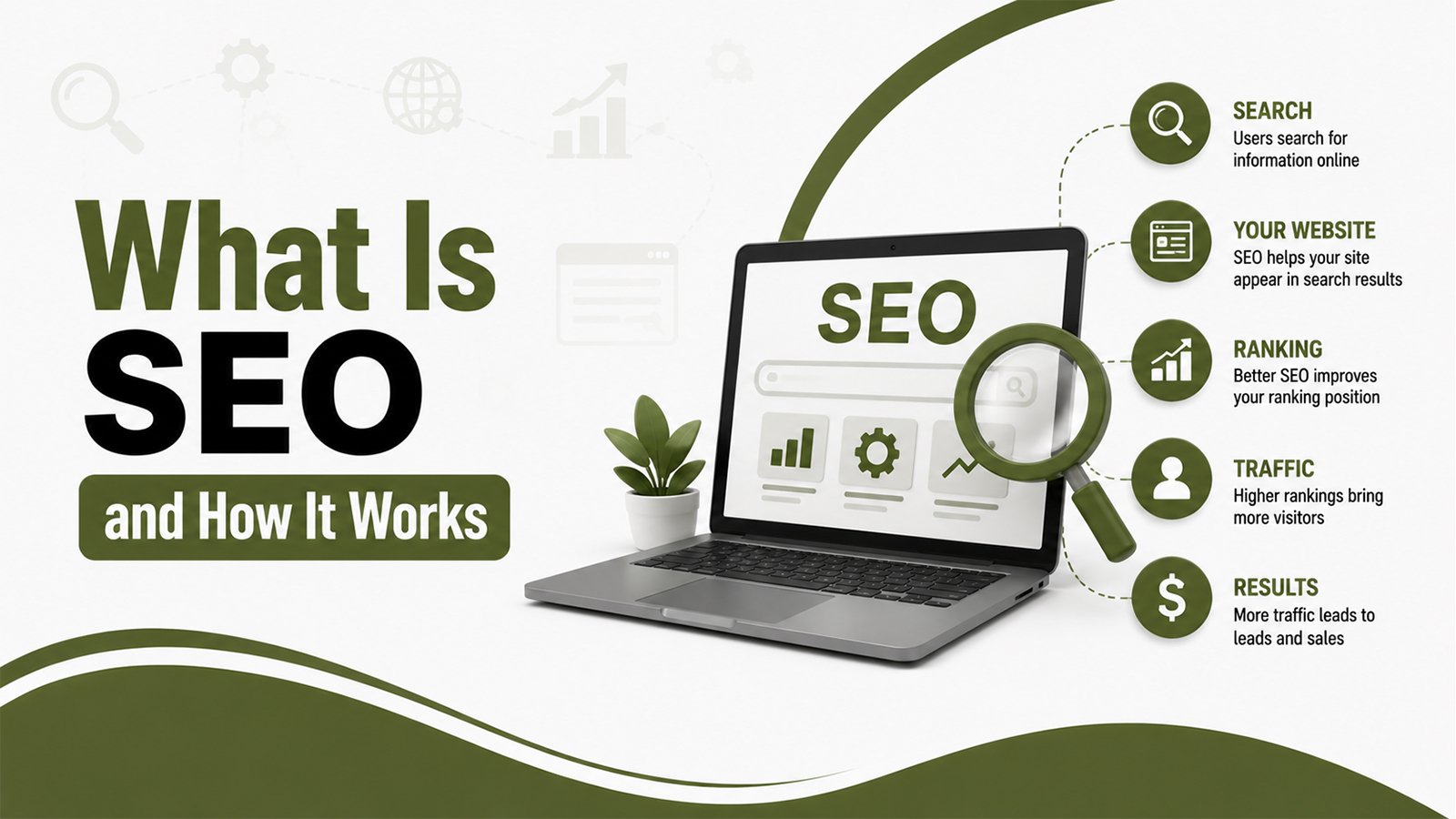
Learn What Is SEO and How It Works with this complete beginner guide. Discover SEO basics, crawling, indexing, ranking factors, keyword research, and proven optimization techniques.
What Is SEO and
How It Works
Discover SEO basics, crawling, indexing, ranking factors, keyword research, and proven optimization techniques to grow your organic traffic.
SEO (Search Engine Optimization) is the process of improving a website’s visibility in search engines like Google. By optimizing content, website structure, and user experience, businesses can attract more organic traffic and improve search rankings — without paying for every click.
What Is SEO?
SEO stands for Search Engine Optimization. It is much more than adding keywords to a webpage. Modern search engines evaluate content quality, user experience, page speed, mobile friendliness, and overall relevance before deciding where a page should rank.
Websites that provide clear answers and valuable information have the best chance of appearing at the top of search results. For businesses, SEO is one of the most effective ways to attract potential customers without paying for every click.
Unlike paid advertising, the benefits of SEO can continue growing over time as content gains authority and trust — making it one of the most cost-effective digital marketing strategies available.
Why Is SEO Important for Businesses?
Every day, billions of searches are performed on Google, and many of those searches represent real buying intent. When a business ranks higher in search results, it gains more visibility, attracts targeted visitors, and increases its chances of generating leads and sales.
Long-Term Traffic
While paid ads stop the moment budget runs out, SEO can keep driving visitors for months or years after content is published.
Credibility & Trust
Users view websites on the first page of Google as more reliable and authoritative than lower-ranking competitors.
Businesses that invest in SEO not only improve their search visibility but also strengthen their brand reputation, increase customer confidence, and create a foundation for sustainable growth.
How Search Engines Work
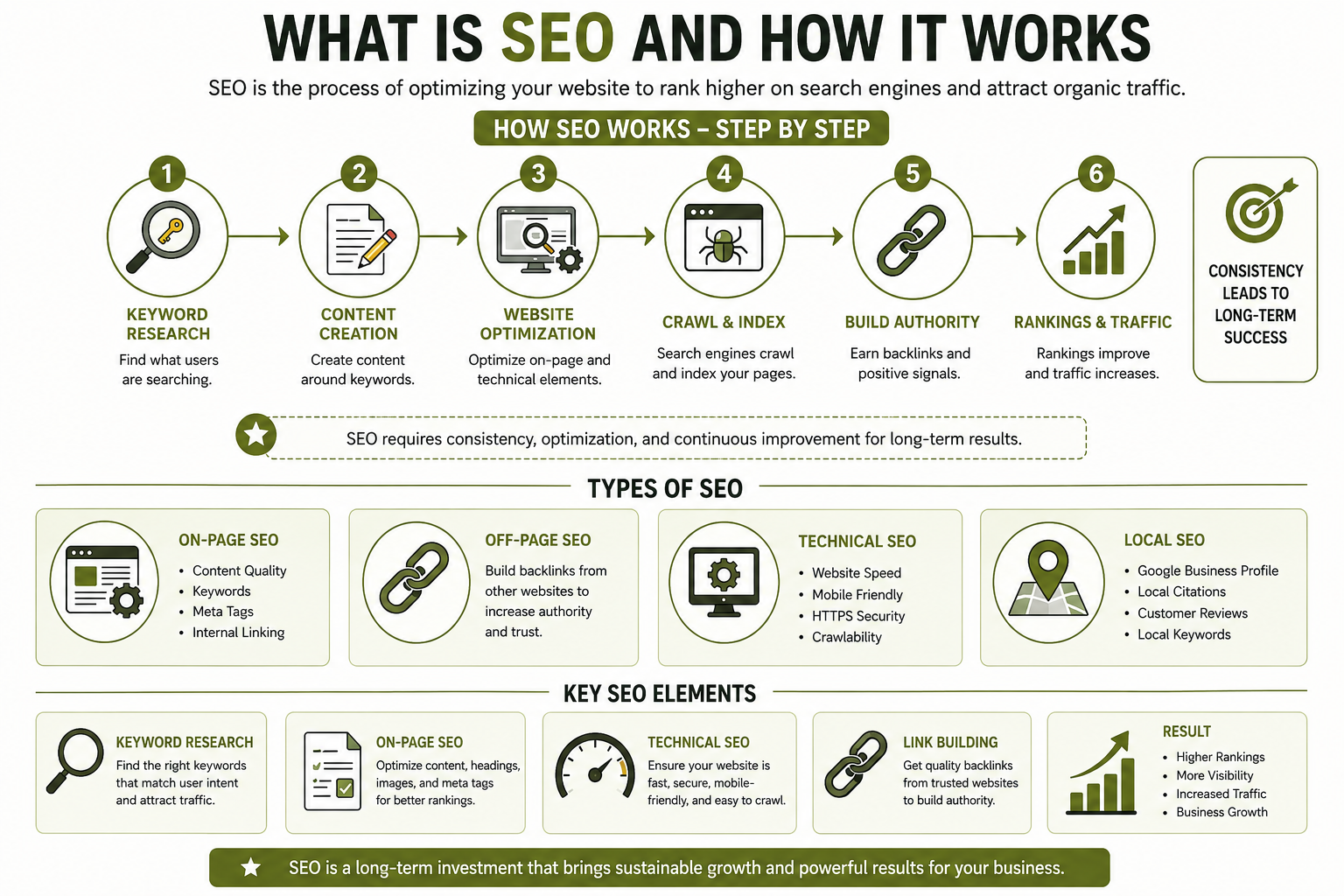
Search engines follow a structured process to discover, understand, and rank websites. The journey begins with crawling, moves to indexing, and ends with ranking the most relevant results for a user’s search query.
Types of SEO
SEO is generally divided into four major categories that work together to improve website visibility.
On-Page SEO
Optimizing elements directly on a webpage — page titles, headings, keywords, images, meta descriptions, internal links, and content quality.
Off-Page SEO
Activities outside the website. The most important factor is backlink building — high-quality backlinks from trusted websites signal authority to search engines.
Technical SEO
Ensures the website functions properly. Covers site speed, mobile responsiveness, HTTPS connections, XML sitemaps, structured data, and crawlability.
Local SEO
Helps businesses appear in local search results by optimizing Google Business Profile, local citations, customer reviews, and location-based keywords.
How SEO Works Step by Step
Keyword Research and SEO
Keyword research is one of the most important parts of SEO. It helps businesses discover the exact phrases their target audience uses when searching online. Effective keyword research allows businesses to create content that matches user intent and attracts qualified traffic.
By targeting relevant keywords with strong search volume and reasonable competition, businesses can improve their chances of ranking higher and generating valuable organic traffic.
On-Page SEO Best Practices
Successful on-page SEO starts with creating high-quality content that solves user problems.
- Every page should have a clear, keyword-optimized title
- Use descriptive headings that structure the content logically
- Include a compelling meta description for each page
- Optimize images with descriptive alt text and compressed file sizes
- Use keywords naturally throughout the content — never stuff them
- Build internal links to help search engines understand site structure
- Ensure content answers the user’s question thoroughly
Technical SEO Fundamentals
Technical SEO provides the foundation for successful rankings. A technically optimized website loads quickly, works well on mobile devices, and allows search engines to crawl pages efficiently.
Must-Have Checks
- Fast page load speed
- Mobile-responsive design
- Secure HTTPS connection
- Clean XML sitemap
- Structured data markup
Issues to Fix
- Broken links (404 errors)
- Duplicate content
- Crawl errors
- Slow loading pages
- Non-indexed pages
Link Building and Off-Page SEO
Backlinks remain one of the strongest ranking signals in SEO. When reputable websites link to your content, search engines view those links as votes of confidence. The more high-quality backlinks a website earns, the stronger its authority becomes.
Businesses can build backlinks through:
- Guest posting on relevant industry websites
- Digital PR and press releases
- Partnerships and collaborations
- Creating linkable assets like research, infographics, and guides
- Industry outreach campaigns
Local SEO for Small Businesses
Local SEO is essential for businesses that serve specific geographic areas. When users search for services near them, search engines prioritize relevant local businesses. Optimizing a Google Business Profile, collecting customer reviews, and maintaining consistent business information across directories can significantly improve local visibility.
For small businesses, local SEO often generates highly qualified leads because users searching locally usually have strong purchase intent.
- Optimize and verify your Google Business Profile
- Collect and respond to customer reviews consistently
- Use location-based keywords throughout your website
- Maintain consistent business info (name, address, phone) across all directories
- Build local citations on relevant business listing sites
Content Marketing and SEO
Content marketing and SEO work together to drive long-term growth. High-quality content helps businesses rank for relevant keywords while providing real value to users. Blog posts, guides, tutorials, case studies, and videos all contribute to stronger search visibility.
Consistently publishing useful content helps build authority, attract backlinks, and increase organic traffic over time.
Common SEO Mistakes to Avoid
Many websites struggle because of avoidable SEO mistakes. Focus on creating valuable content and following search engine best practices rather than attempting shortcuts that could result in ranking penalties.
Common issues include: keyword stuffing, duplicate content, slow page speed, poor mobile usability, weak internal linking, and low-quality backlinks. Avoid all of these.
SEO Tools Every Beginner Should Know
Google Search Console
Monitor website performance, identify technical issues, and track keyword rankings in Google Search.
Google Analytics
Tracks website traffic, user behavior, and conversion performance across all channels.
Ahrefs
Provides backlink analysis, keyword research, and in-depth competitor insights.
SEMrush
Offers keyword tracking, site audits, and comprehensive competitive research tools.
Rank Math
A WordPress SEO plugin that helps optimize content, metadata, and technical SEO settings.
How Long Does SEO Take to Work?
SEO is a long-term strategy rather than a quick solution. Most websites begin seeing noticeable improvements within three to six months, although highly competitive industries may take longer. Results depend on website authority, competition levels, content quality, and optimization efforts.
Consistency is one of the most important factors in achieving sustainable SEO success. Businesses that keep publishing, optimizing, and improving their systems will outperform those who treat SEO as a one-time task.
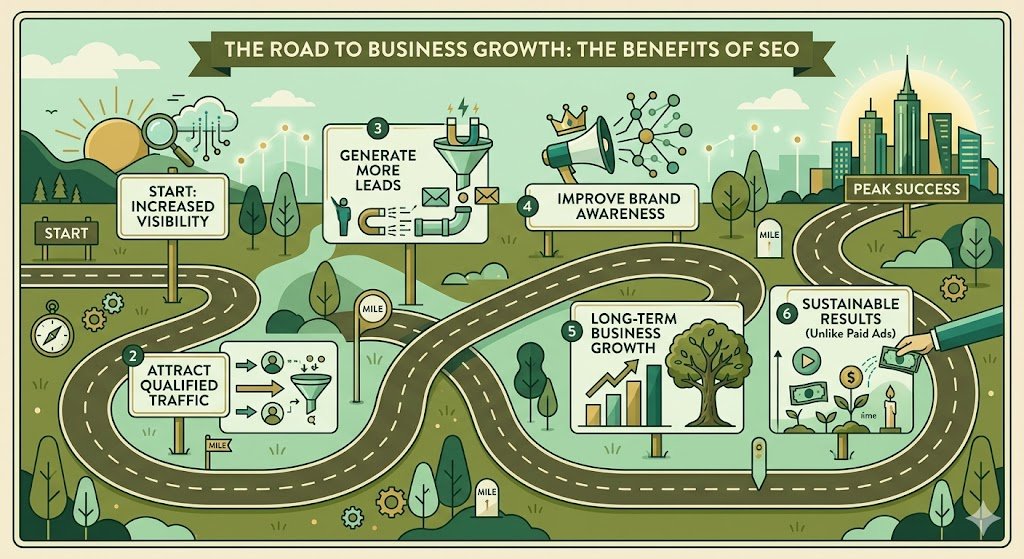
Benefits of SEO
The benefits of SEO extend far beyond rankings. Businesses that invest in SEO often achieve higher returns on investment over time because organic traffic continues generating results long after content is published.
Visibility
Appear in front of the right audience at the exact moment they are searching for what you offer.
Qualified Traffic
Attract visitors who are already interested in your products or services — not random traffic.
Brand Authority
Ranking on page one signals credibility and trustworthiness to potential customers.
Long-Term Growth
Unlike paid ads, SEO keeps generating traffic and leads even when you are not actively spending.
SEO vs Google Ads
SEO and Google Ads both help businesses appear in search results, but they work very differently. Many successful companies use both strategies together to maximize traffic and lead generation.
| Factor | SEO | Google Ads |
|---|---|---|
| Cost | No cost per click — investment in content and optimization | Pay for every click on your ad |
| Speed | Takes 3–6+ months to see significant results | Immediate visibility as soon as ads go live |
| Longevity | Rankings and traffic can persist for years | Traffic stops the moment the budget runs out |
| Trust | Organic results are viewed as more credible by users | Clearly marked as ads — some users skip them |
| Best for | Long-term sustainable growth | Fast results, promotions, new launches |
The smartest strategy is to use SEO for long-term organic growth while using Google Ads for immediate visibility — both channels reinforce each other.
SEO Trends for 2026
SEO continues to evolve as search engines become more sophisticated. Businesses that stay updated with these trends will be better positioned to compete in search results.
How to Create an SEO Strategy
An effective SEO strategy starts with setting goals and understanding your target audience. Follow these steps to build a strategy that delivers consistent, long-term results.
Final Thoughts on SEO
SEO remains one of the most valuable digital marketing strategies available today. By combining quality content, technical optimization, keyword research, and authority building, businesses can attract more organic traffic and create sustainable long-term growth.
SEO is not about tricking search engines — it is about creating the best possible experience for users while helping search engines understand and trust your content. The businesses that win in search are those that consistently deliver value, stay technically sound, and keep improving over time.
Start with the basics, stay consistent, and treat SEO as a long-term investment rather than a quick fix — the results will follow.