

Everything dental practices need to know about attracting new patients online — from SEO and Google Ads to reputation management and social media.
Digital Marketing for Dentists: The Complete 2026 Guide
Everything dental practices need to know about attracting new patients online — from SEO and Google Ads to reputation management and social media.
Most dentists didn’t go to dental school to become marketers. But in 2026, having a strong grasp of digital marketing for dentists isn’t optional anymore — it’s the difference between a practice that’s fully booked and one that’s quietly hemorrhaging patients to the competitor down the street who figured out Google first.
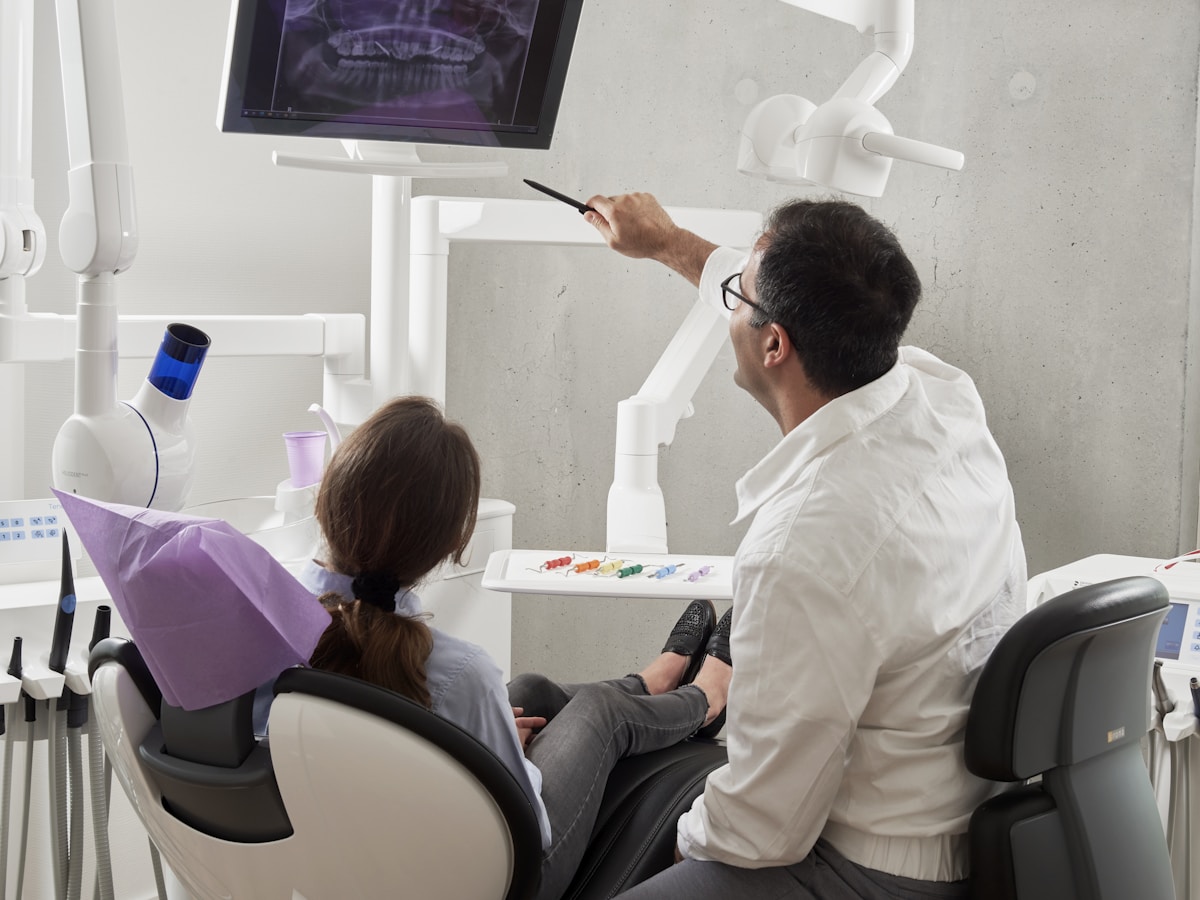
The good news is that digital marketing for dentists doesn’t have to be complicated. Once you understand which channels actually move the needle for dental practices — and which ones are mostly noise — you can build a straightforward system that consistently brings new patients through the door without requiring you to think about it every day.
This guide covers everything: your website, local SEO, Google Ads, social media, reputation management, email marketing, content strategy, HIPAA compliance, and how to budget it all without overspending. Whether you’re a solo practitioner or managing a multi-location group, this is the digital marketing for dentists playbook that actually reflects how patients find and choose a dentist in 2026.
01What Is Digital Marketing for Dentists?
Digital marketing for dentists is the collection of online strategies and tools a dental practice uses to attract new patients, retain existing ones, and build a strong, trusted reputation in their local community.
It includes everything from how your practice appears in Google Search results and Google Maps to how your website converts visitors into booked appointments, how your online reviews shape first impressions, and how your social profiles (Facebook, Instagram, and increasingly TikTok and YouTube) keep your practice top of mind between visits.
What makes digital marketing for dentists slightly different from general business marketing is the local nature of the industry. A patient in Portland isn’t going to drive to Denver for a cleaning. Every strategy has to be anchored in local visibility, local trust, and local conversion.
02Why Digital Marketing for Dentists Matters More Than Ever
The way patients find a dentist has fundamentally changed. Referrals from friends and family still matter — but before a new patient calls, they almost always Google you first. They check your reviews, look at your website, and form an opinion before they’ve ever spoken to your front desk.
- Search “dentist near me” or “best dentist in [city]”
- Read your Google reviews (and your competitors’)
- Visit your website and judge it within seconds
- Check if you accept their insurance
- Look at your before/after photos or treatment explanations
- See if booking online is possible
If any part of that experience falls short — your reviews are thin, your website looks outdated, or you don’t show up in local search at all — that patient books with someone else. Digital marketing for dentists is simply the work of making sure that doesn’t happen.
Digital marketing for dentists isn’t about going viral or chasing social media trends. It’s about being visible, credible, and easy to book for the patients in your area who are actively looking for what you offer.
03Your Website: The Foundation of Digital Marketing for Dentists
Every other piece of digital marketing for dentists — SEO, paid ads, social media — eventually points back to your website. If your website isn’t converting visitors into booked patients, you’re paying to send people to a dead end.
A high-performing dental website in 2026 needs to do a handful of things well:
04Local SEO: The Most Important Long-Term Strategy for Digital Marketing for Dentists
When someone searches “dentist near me” or “family dentist in [your city],” Google serves up a local pack — usually three practices with their star rating, address, and hours. Appearing in that local pack is one of the most valuable things you can do in digital marketing for dentists, because patients who find you this way are actively looking for a dentist right now.
Local SEO for dentists comes down to three things:
Local SEO takes time — usually a few months to see meaningful movement — but it’s the only channel in digital marketing for dentists that compounds over time without a recurring ad spend attached to it.
05Paid Advertising in Digital Marketing for Dentists
If local SEO is the long game, paid advertising is the short game. It puts you in front of patients immediately — the day your campaign goes live — which makes it particularly valuable for new practices, practices entering a new service area, or any time you want to accelerate growth of a specific service.
In digital marketing for dentists paid strategy, there are two main options that consistently deliver results:
The biggest mistake dental practices make with paid advertising is sending ad traffic to their homepage instead of a dedicated, appointment-focused landing page. Every dollar spent on ads should point somewhere designed specifically to convert that visitor into a booked patient.
07Reputation Management: The Most Underrated Part of Digital Marketing for Dentists
Ask most dental practices what their biggest marketing concern is, and you’ll hear some version of “getting more patients.” Ask them what actually determines whether a prospective patient books with them or their competitor, and the honest answer is almost always: reviews.
Reviews are the closest thing dentistry has to a public trust score. A practice with 12 reviews averaging 3.8 stars is going to lose patients every single day to the practice down the street with 200 reviews averaging 4.7 stars — regardless of how much better the care actually is.
Effective reputation management in digital marketing for dentists isn’t about gaming the system. It’s about making it genuinely easy for satisfied patients to share their experience. The simplest approach that works is asking at checkout — or automating a follow-up text or email asking patients to leave a review — and then responding to every review you receive, both positive and negative.
Responding to negative reviews matters more than most dentists realize. A thoughtful, non-defensive response to a critical review often increases patient trust more than a string of five-star testimonials.
08Email Marketing and Patient Retention
Acquiring a new patient costs significantly more than retaining an existing one — yet most digital marketing for dentists focuses almost entirely on new patient acquisition and very little on the patients already in the system.
Email is the most practical channel for patient retention in digital marketing for dentists. A simple sequence of automated emails can:
- Send appointment reminders that reduce no-shows
- Remind patients when their six-month cleaning is due
- Follow up after procedures to check on recovery
- Promote seasonal offers or new service launches
- Ask for reviews after a positive appointment
- Re-engage patients who haven’t been in for more than a year
None of this is complicated, and most dental practice management software already supports automated appointment reminders. The opportunity most practices miss is expanding beyond reminders to actually communicate with patients between visits.
09Content Marketing for Dental Practices
Content marketing sounds like a heavy lift, but in digital marketing for dentists it doesn’t have to mean producing articles every week. It means answering the questions your patients are already asking online — in a format that helps Google understand your expertise and gives prospective patients a reason to trust you before they’ve ever walked through your door.
The most effective content for dental practices tends to be:
- Service-specific pages that explain what to expect from a procedure
- FAQ pages covering common patient concerns (“Does a root canal hurt?” “How long do veneers last?”)
- Blog posts targeting local search terms (“best teeth whitening in [city]”)
- Video content demonstrating procedures or introducing the team
- Before/after galleries for cosmetic services
You don’t need to publish daily or even weekly. A handful of well-written, genuinely useful pages that answer real patient questions will do more for your long-term visibility than dozens of thin, generic blog posts churned out on a publishing calendar.
10HIPAA Compliance in Digital Marketing for Dentists
It’s worth calling this out on its own because it’s the one area where a mistake in digital marketing for dentists doesn’t just cost you patients — it can cost you significant fines and, in serious cases, your reputation with regulators.
HIPAA applies to how you handle patient information online in ways that aren’t always obvious:
None of this means you can’t do effective digital marketing for dentists — it just means certain executions require more care than they would in a non-healthcare business.
11Budgeting for Digital Marketing for Dentists
One of the most common questions in digital marketing for dentists is: “How much should we be spending?” The honest answer is that it varies significantly based on your market, your growth goals, and how competitive your local landscape is.
That said, a typical dental practice investing in digital marketing seriously can expect to allocate somewhere between five and ten percent of annual revenue toward marketing — with a meaningful portion of that going toward Google Ads and SEO in the early stages, and the mix shifting over time as organic visibility builds.
- Website maintenance and hosting: $100 – $500/month
- Local SEO and content: $500 – $2,000/month
- Google Ads (ad spend + management): $1,500 – $5,000/month
- Social media management: $500 – $2,500/month
- Reputation management tools: $100 – $400/month
- Email marketing: $50 – $300/month
The most important thing is to think about digital marketing for dentists in terms of cost per new patient rather than total spend. If you’re spending $2,000 on Google Ads and generating fifteen new patients a month worth an average of $1,200 in lifetime value each, that’s an extremely strong return — regardless of how the absolute number feels.
12Common Mistakes in Digital Marketing for Dentists
13Getting Started: A 90-Day Digital Marketing for Dentists Strategy
If you’re building your digital marketing for dentists strategy from scratch — or rebuilding it after realizing your current approach isn’t working — here’s a 90-day sequence that prioritizes impact:
By the end of 90 days, you’ll have a working digital marketing for dentists system in place — one you can measure, optimize, and build on month after month.
14Frequently Asked Questions About Digital Marketing for Dentists
Digital Marketing for Dentists Isn’t Complicated — It Just Has To Be Consistent.
The dental practices that dominate their local markets in 2026 aren’t doing anything exotic. They have a fast, trustworthy website. They show up in local search. They have a strong review presence. They run paid ads that point to pages designed to convert. They stay in touch with their existing patients. And they do all of this consistently, month after month.
Digital marketing for dentists works the same way dentistry itself works: the practices that show up reliably, deliver a great patient experience, and ask for feedback consistently tend to win in the long run. The marketing is just how you make sure enough people give you the chance to prove it.
Start with the fundamentals, measure what matters, and add complexity only once your foundation is solid. That’s the whole playbook.
06Social Media in Digital Marketing for Dentists
Social media’s role in digital marketing for dentists is often misunderstood. Dentists tend to either ignore it completely or obsess over posting frequency without any strategic purpose. The reality is somewhere in the middle.
You don’t need to go viral. You don’t need to post every day. But a consistent, human presence on the platforms your patients actually use does three things that are genuinely valuable for any dental practice: it builds familiarity with people who haven’t booked yet, it reinforces trust with your existing patients, and it gives Google’s local algorithm more signals that your practice is active and legitimate.
Facebook still has the broadest reach for the demographic that makes most dental booking decisions (parents, adults 35-65). Instagram performs well for cosmetic services. TikTok is growing rapidly and worth experimenting with if you have a younger patient base or offer cosmetic procedures with strong visual results.